
1. Introduction
Imagine a factory that never gets tired, never forgets, and never slows down. Machines that learn from mistakes. Robots that fix problems before they happen.
This is not a sci-fi movie. This is AI in industrial automation, and 2025 is the year it becomes mainstream.
In this guide, we’ll break down everything in simple, conversational English—no complicated jargon.
Let’s dive in.
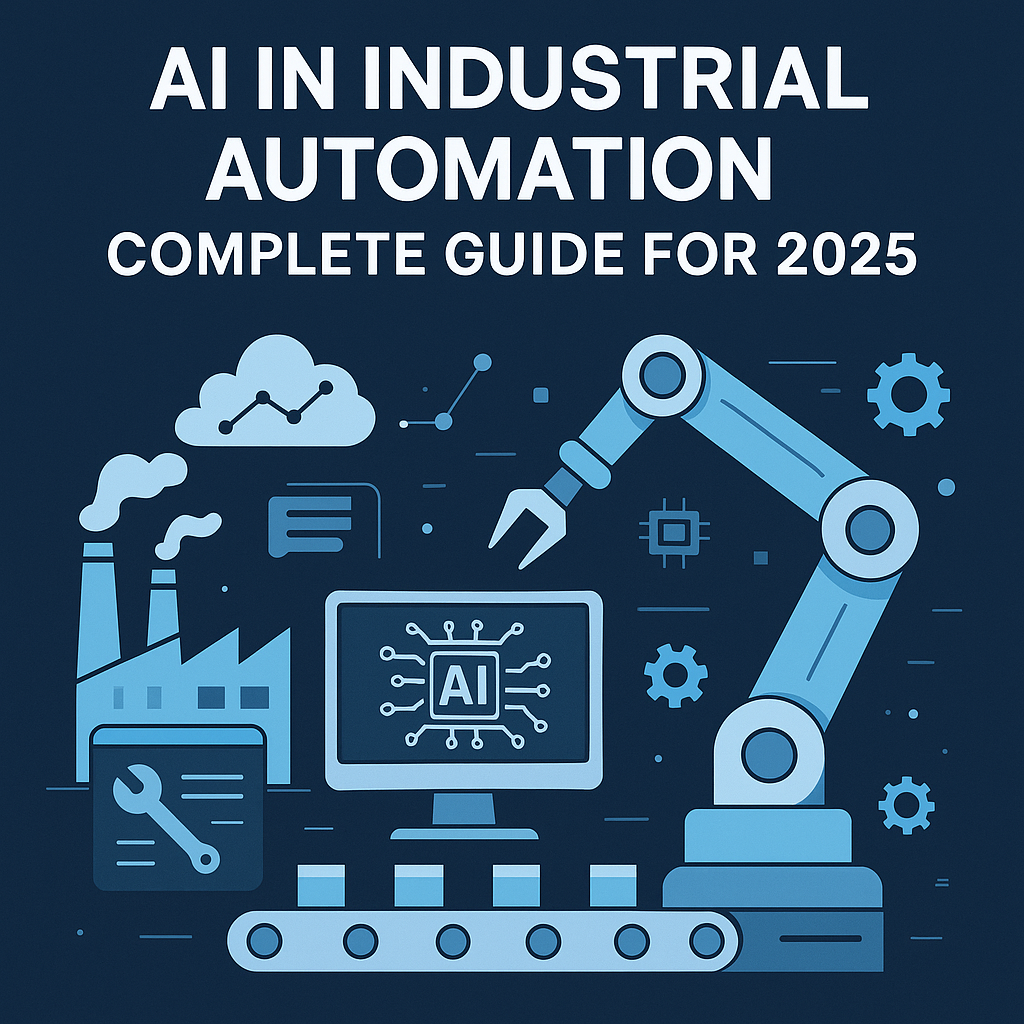
Table of Contents
- Introduction
- What Is AI in Industrial Automation?
- Why AI Matters in 2025
- How AI Works in Industries
- Key Applications of AI in Manufacturing
- Comparison: Traditional Automation vs AI Automation
- Benefits of AI for Industries
- Pros & Cons of AI in Industrial Automation
- Real-Life Industry Use Cases
- Future Trends in 2025
- Feature–Benefit Breakdown
- Tips for Companies Starting AI Automation
- Internal & External Linking Suggestions
- Conclusion
2. What Is AI in Industrial Automation?
AI in industrial automation means using artificial intelligence, machine learning, robotics, and smart sensors to automate industrial processes.
In short:
AI helps industries work faster, smarter, and safer.
It goes beyond old-school automation by allowing machines to think, predict, and optimize on their own.
3. Why AI Matters in 2025
2025 is a big year because industries are facing:
- higher production demands
- skilled labor shortage
- increasing operational costs
- need for real-time efficiency
AI helps solve all of these.
Fun fact: Reports from McKinsey and IBM show industries adopting AI can boost output by 20–40%.
4. How AI Works in Industries
AI works using:
- Smart Sensors → Collect data
- Machine Learning → Learns patterns
- Robotics → Performs tasks
- Edge Computing → Makes quick decisions
- Cloud AI → Runs analytics
Example: If a motor is overheating, AI predicts failure before it breaks.
5. Key Applications of AI in Manufacturing
5.1 Predictive Maintenance
AI predicts machine failures in advance.
Example: AI tells you the conveyor belt will stop in 3 days due to friction.
5.2 Quality Control
AI cameras detect tiny defects faster than humans.
5.3 Robotics Automation (AI Robots)
Robots that learn motions and improve over time.
5.4 Supply Chain Optimization
AI forecasts raw material demand.
5.5 Energy Management
AI reduces power wastage—up to 15–25% savings.
6. Comparison Table: Traditional Automation vs AI Automation
| Feature | Traditional Automation | AI Automation 2025 |
|---|---|---|
| Decision Making | Rule-based only | Learns & adapts |
| Maintenance | Reactive | Predictive |
| Efficiency | Moderate | Very high |
| Flexibility | Low | High |
| Cost Saving | Limited | Significant |
7. Benefits of AI for Industries
- Lower operational cost
- Higher productivity
- Fewer machine breakdowns
- Better product quality
- Real-time decision making
- Safer workplace
8. Pros & Cons of AI in Industrial Automation
| Pros | Cons |
|---|---|
| Increases efficiency | High initial cost |
| Reduces downtime | Requires skilled staff |
| Enhances safety | Cybersecurity risks |
| Improves quality | Training time needed |
9. Real-Life Industry Use Cases
1. Tesla Gigafactory (Robotics + Vision AI)
Robots adjust their tasks based on production needs.
2. Amazon Warehouses
AI robots pick, pack, and move items 24/7.
3. Tata Steel
Uses AI to detect cracks in steel sheets in milliseconds.
4. Automotive Smart Plants
AI inspects engine parts automatically.
10. Future Trends in 2025
- AI-powered digital twins
- Autonomous robotic fleets
- AI-driven self-healing systems
- Voice-controlled factory floors
- Hyper-automation in production
11. Feature–Benefit Table
| AI Feature | Benefit |
|---|---|
| Predictive analytics | Cuts machine downtime |
| Vision AI | Improves quality checks |
| Robotics automation | Faster production |
| AI energy systems | Saves electricity |
| Machine learning | Better accuracy over time |
12. Tips for Companies Starting AI Automation
- Start with one pilot project
- Use cloud AI tools (Azure, AWS, Google Cloud)
- Train your team
- Maintain cybersecurity
- Use dashboards for insights
- Measure cost savings monthly
14. Conclusion
AI is not the future anymore.
It’s today’s reality, and industries using it in 2025 will stay ahead of the competition.
If you want to upgrade your business with AI solutions, start now—even a small step makes a big difference.